

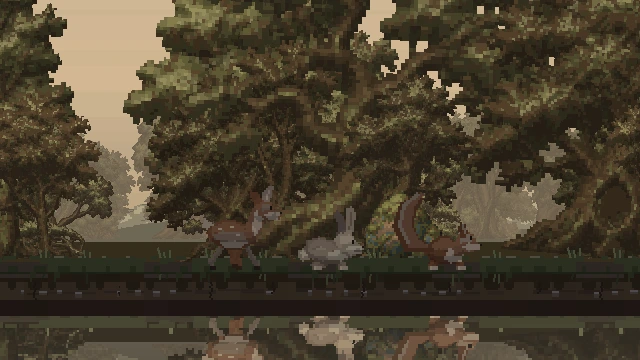
A rabbit listens at the edge of the clearing. A squirrel slips through the undergrowth. Farther out, a deer lifts its head as a villager passes.
Ghosthold’s wildlife has grown to 24 animal designs, with 19 new species joining the woodland cast. Their Aseprite animations bring small breaths, moving ears and trailing tails to the spaces beyond the settlement. Each habitat has its own visitors.
These six-second GIFs use staged in-game scenes to show the animals and their reactions clearly. They are development previews. The complete video at the end has playback controls.
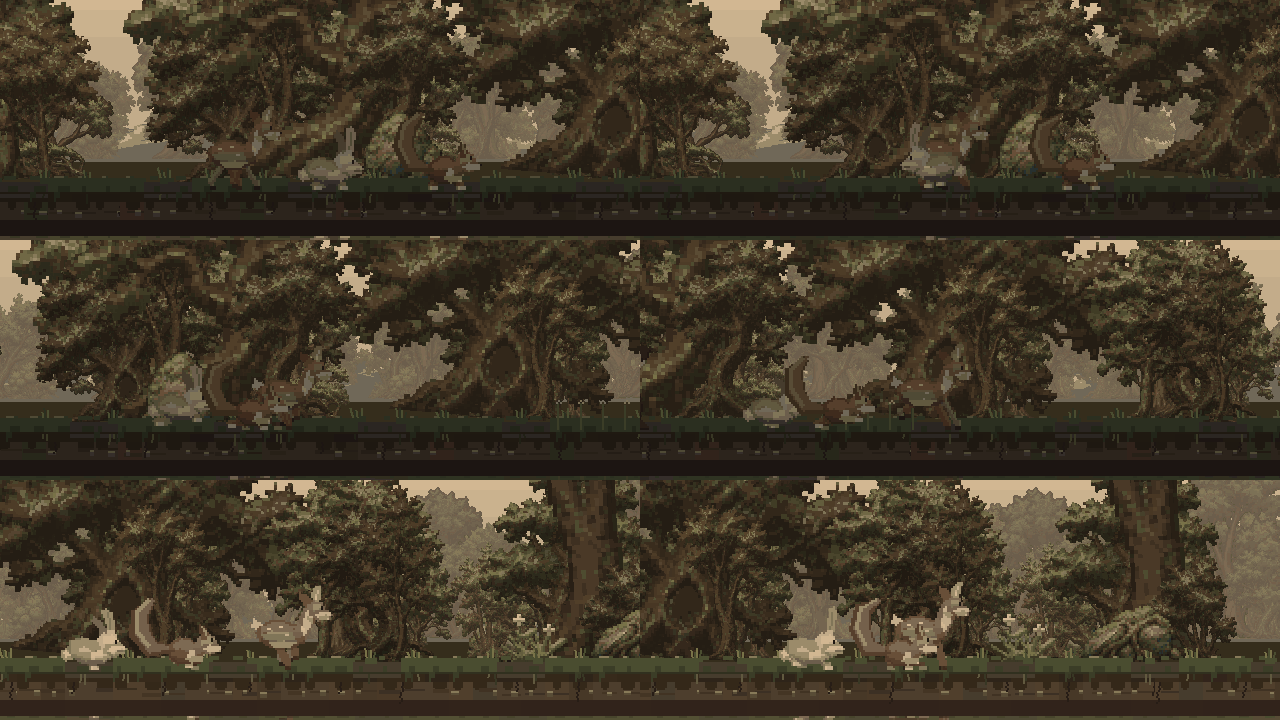
When a villager comes too close
Deer, rabbits and squirrels notice the wanderer and awake villagers. Approach too closely and they flee, keeping their direction for a little while after the danger has passed. The woods settle again when they feel safe.
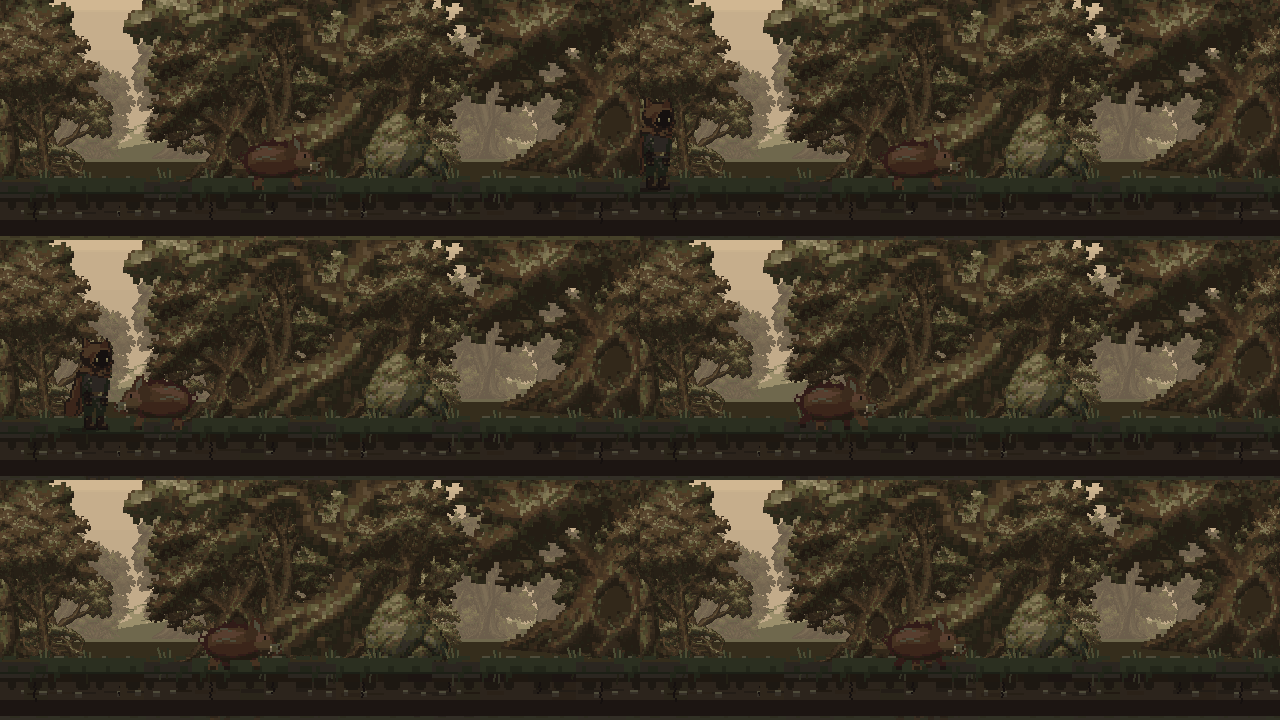
Give the boar a little room
A boar has a heavier step and a different answer to an approaching wanderer. It can charge and shove the hero backwards, then pauses to recover. Nearby villagers can pass without provoking the same pursuit.
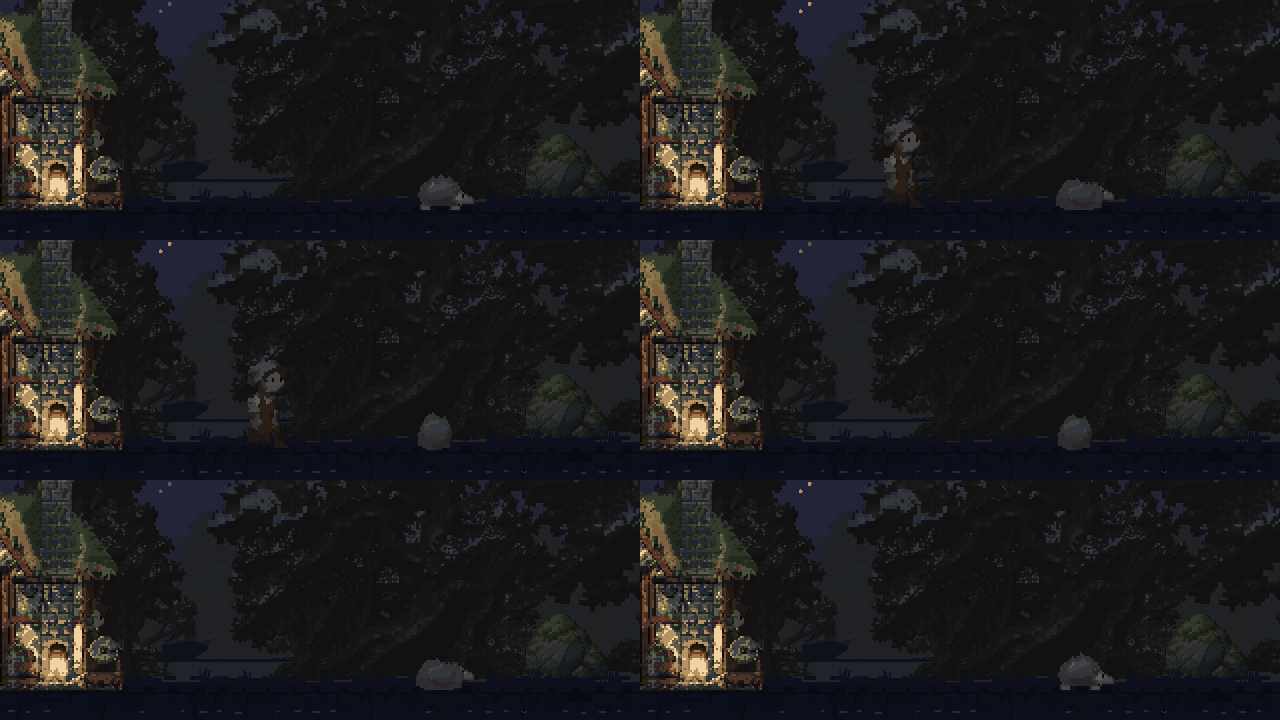
A small visitor after dark
Hedgehogs appear at night. When someone gets too close, the little animal stops and tucks into a ball. It waits, breathing quietly, before opening again once the visitor has gone.
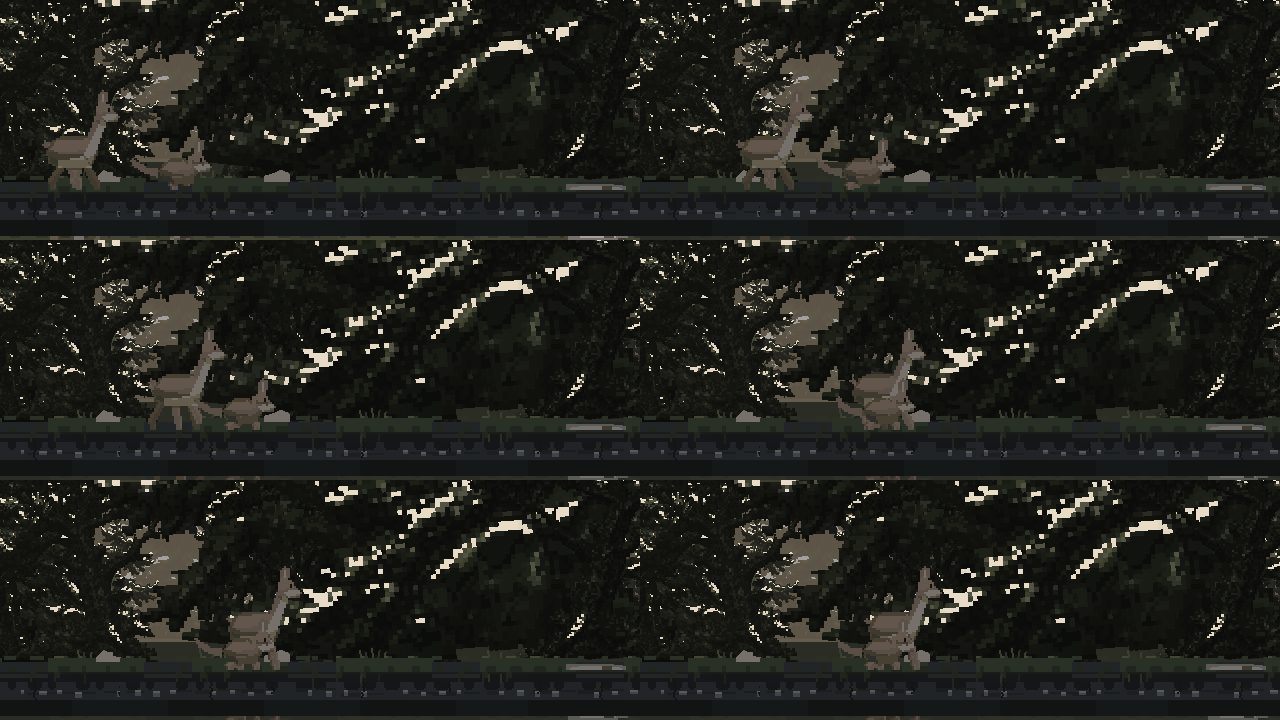
Along the mountain paths
Mountain areas have guanacos and viscachas. The guanaco’s long neck gives it a different silhouette from the woodland deer, while the viscacha keeps low to the rocky ground with its long tail following behind.
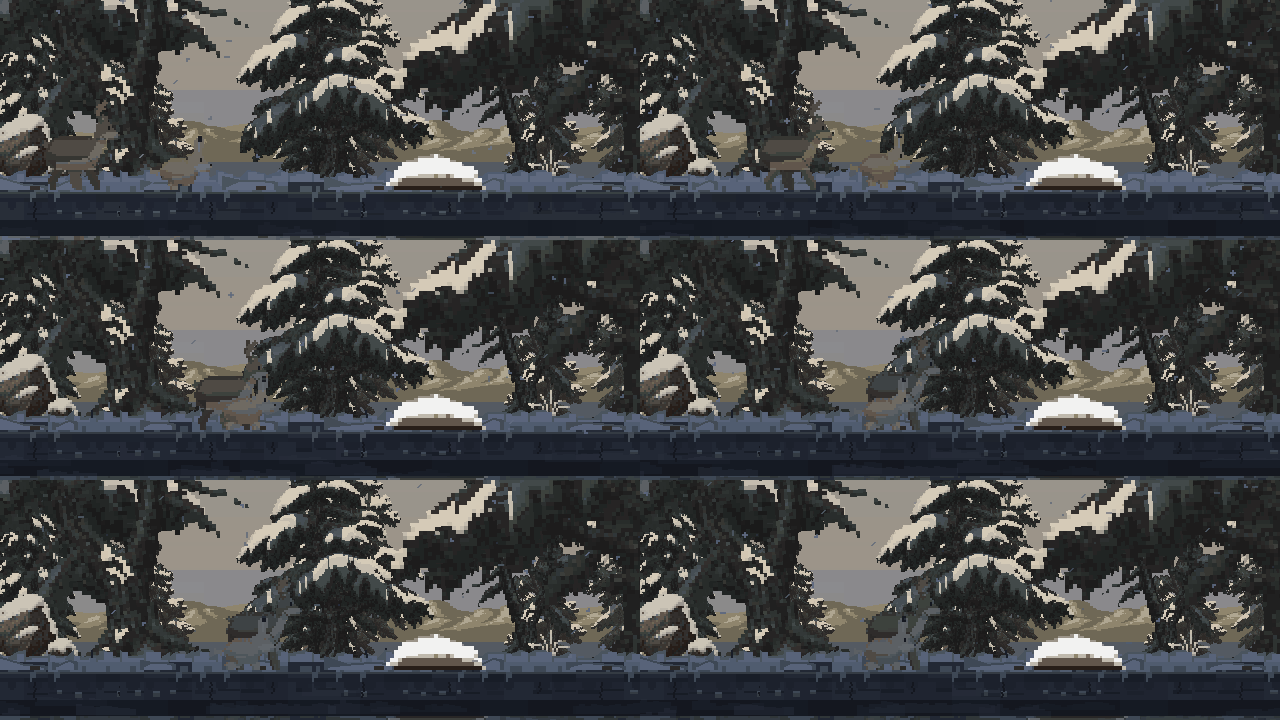
Cold-country grazers
Reindeer and pale hares belong in the colder areas. Snowy woodland has snowshoe hares; the tundra has Arctic hares. Reindeer remain through Frost, while the temperate deer leave for the season. Hibernating small animals stay out of the winter population.
Snow can catch on a resting coat. As soon as an animal moves, it carries no settled snow.
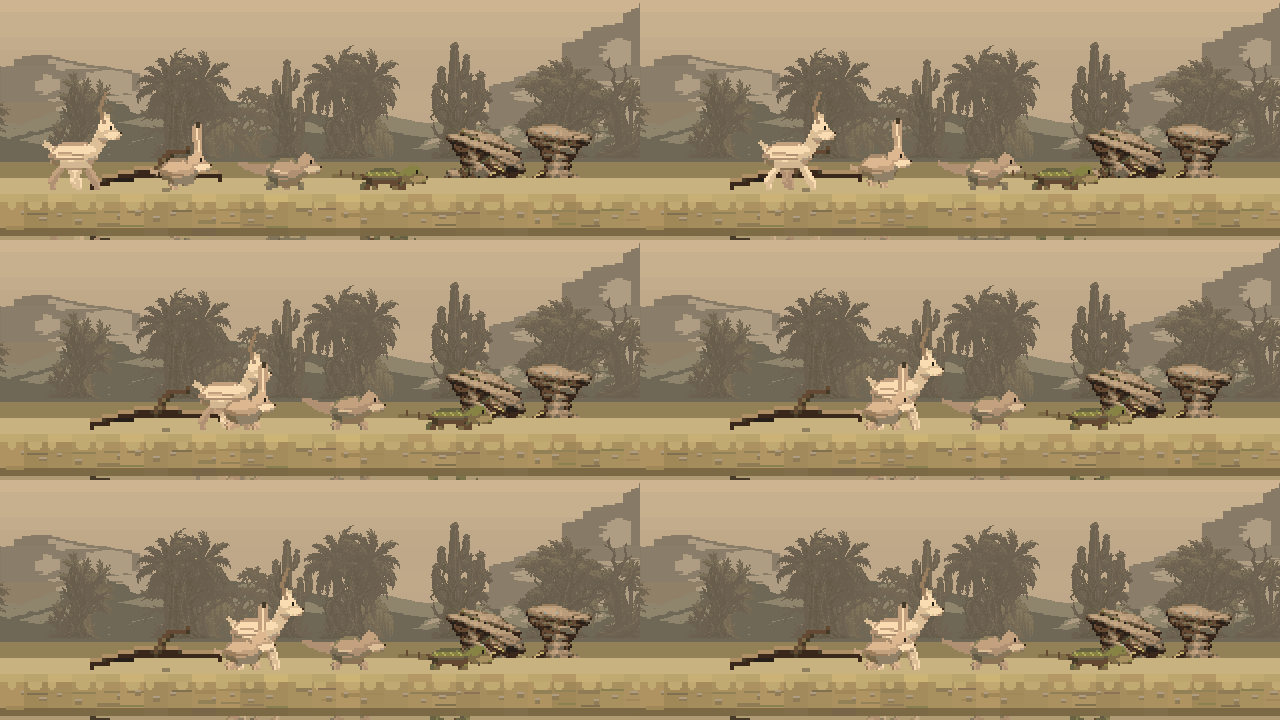
Life among the sand and scrub
Dorcas gazelles, Cape hares and Barbary ground squirrels bring lighter coats and different shapes to the dry ground. A spiny-tailed lizard joins them during the day, moving on a low body with a jointed tail.
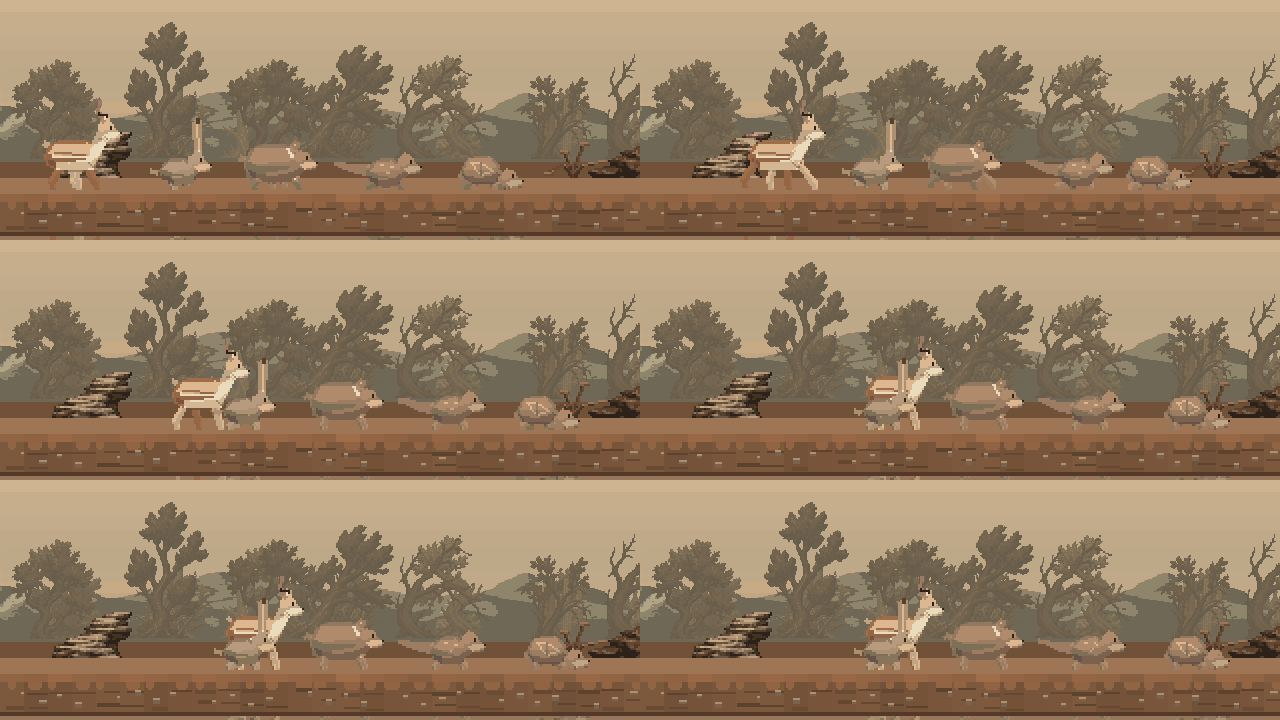
Neighbours in the badlands
Pronghorn, black-tailed jackrabbits, collared peccaries and rock squirrels share the dry scrub with desert tortoises. Peccaries avoid nearby people. The tortoise has its own response: it withdraws its head beneath a rigid shell and waits before extending it again.
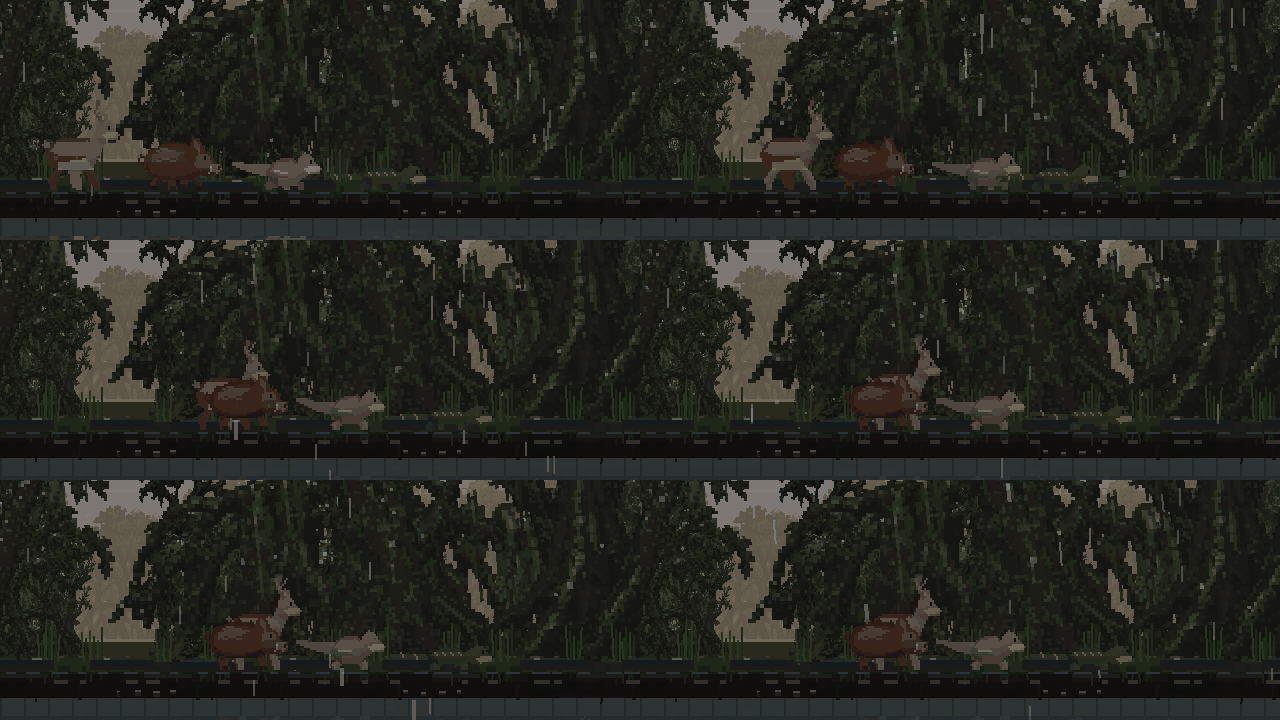
At the wetland edge
The swamp has barasingha, wild boar, palm squirrels and water monitors. Rain gradually wets their coats and scales. Shelter stops new wetting, while an already wet animal takes time to dry.
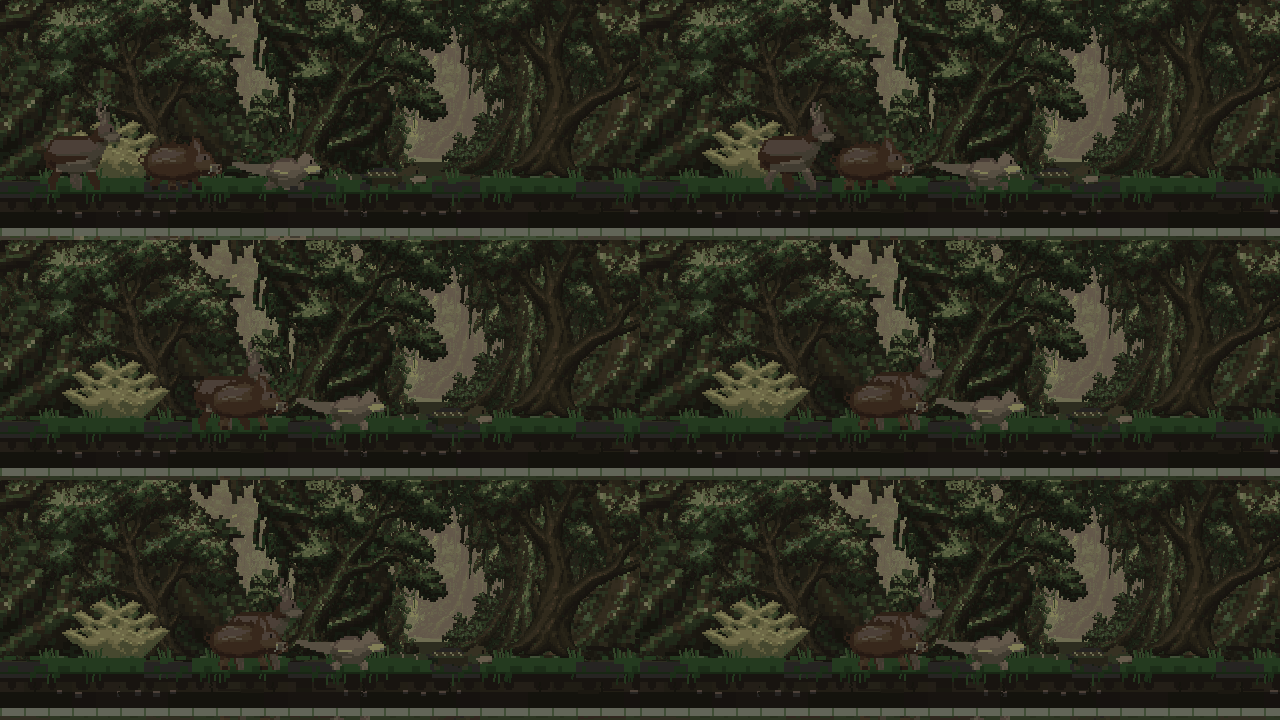
Beneath the jungle canopy
Sambar take the grazer’s place in the jungle, alongside boar, palm squirrels and water monitors. The monitor’s low legs and long tail give it a different movement from the small mammals.
The familiar deer, rabbit, boar, squirrel and hedgehog remain around temperate woodland and village edges. Other habitats leave unsuitable roles empty; the barren volcanic ashlands have no ground-animal population.
All of them share the world’s light. Coats darken with the scene after sunset, and the animals stay part of the moonlit woods.
The complete video below brings all nine scenes together.
Explore Ghosthold’s biomes, or watch the wind reach the trees.